Use of food delivery apps in Canada up 7.4 per cent since 2020: survey
By Haeley DiRisio Opens in new windowPublished: September 10, 2025 at 11:14AM EDT

A recent survey from Dalhousie University’s Agri-food Analytics Lab found the use of apps like UberEats and DoorDash has increased significantly across Canada.The survey, in partnership with Caddle, found 27.4 per cent of Canadians now order through these platforms more than once a month. In 2020, that number was 20 per cent.Download the CTV News App for breaking news alerts and video on all the top storiesThe Maritime provinces are lowest in the findings of the “Regular Food Delivery App Usage by Province in Canada.” New Brunswick residents sit at the highest in the Maritimes with 14.5 per cent using delivery apps regularly, followed by Nova Scotia at 12.6 per cent and P.E.I. with 9.6 per cent of residents using delivery apps regularly.The survey found nearly 58 per cent of Canadians either stopped using these apps or never adopted them. The main reason stated was costs.However, although food costs have increased, according to the Agri-food Analytics Lab, “Canadians are showing a willingness to spend more not for the food itself, but to save time and increase convenience. Delivery, in this sense, is becoming a modern trade-off – where efficiency and comfort outweigh strict economic rationality.”The Dalhousie survey found millennials and Gen Z are the biggest users of food delivery apps with 38.6 per cent of millennial regular users and 38.1 per cent of Gen Z users.“Younger Canadians, despite having less disposable income, are more willing to allocate funds to delivery. For them, the smartphone is practically an organic extension of daily life,” a release from the Agri-food Analytics Lab reads.The survey sited many college and university students use food delivery apps as it is often their first time living away from home and juggling schoolwork, social lives and part-time jobs can become overwhelming, especially during back-to-school season.“With limited cooking skills and tight schedules, many will turn to these services as an alternative to grocery shopping or campus dining halls,” the release continues.
Autobot News
Halifax food bank opens free café as a ‘safe place to chill’
By Vanessa Wright Opens in new window Published: September 09, 2025 at 6:11PM EDT

A Halifax non-profit organization is serving up hot coffee and baked goods to those in need.Organizers with Brunswick Street Mission say it’s their way of giving the community a space to eat, paint and enjoy themselves.“It’s been really positive. I feel like with every month it has gained popularity, and we see a lot of return folks, but we also see a lot of new faces on the regular,” says Jazmin Byee, Brunswick Street Mission’s café service navigation support worker.The organization offers food, clothing and laundry services to individuals affected by poverty.Download the CTV News App for breaking news alerts and video on all the top stories“We noticed that people were already spending a lot of time here, either waiting on the food bank, waiting on the other services, or just using it as a place to rest or seek shelter from the elements during the day. So, we figured, why not kind of open it up to just make it more comfortable (and) welcoming for people,” she says.Patrick Maubert, the organization’s program director, says it’s also a place where community members can get creative through painting.“There’s lots of art projects that people are very passionate about and very proud of,” says Maubert.The mission has inspired those receiving services, as well as those delivering them.“It’s beautiful helping humanity,” says volunteer Zeinab Abdulkadir. “And when I saw that they needed more hands, I thought it was beautiful. (Just) do something for another human.”The food bank has put out a call out for help maintaining these services.“We are always looking for volunteers to come and support. And we’re also always looking for donations. Donations of art supplies, donations of clothing supplies, especially going into the colder months, more winter wear and survival kits,” says Maubert.“I think folks just enjoy being here. And that brings us a lot of joy because everyone deserves a cup of coffee in a safe place to chill.”
The science behind ‘super foods’ is at the heart of this new Western lab
By Bailey Shakyaver Opens in new windowPublished: January 30, 2025 at 12:41PM EST
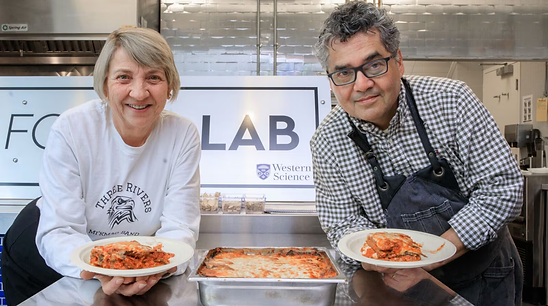
The secret to increased cognition, brain health, and memory may just be at the end of your fork - and a newly established research lab at Western University is hoping to prove it.While folk medicine has touted the benefits of certain foods for decades, modern science has largely relegated these traditions to pseudoscience.However, the chemical makeup of some ‘super foods’ have direct ties to cognitive wellness and performance.Although this data is helpful, Raymond Thomas, biology professor and expert in circular food systems, says that it doesn’t mean much if you don’t want to eat it, “It starts with flavour. The food has to taste good, or it doesn’t work.”Chef Tim D’Souza and professor Raymond Thomas at the official launch of the nootropics food lab.
(Source: Christopher Kindratsky/Western Communications)Canada’s first nootropics food lab at Western hopes to weave Indigenous and regional understandings of how food contributes to mental wellness with science, practical application, and tasty meals.The lab hopes to utilize the latest advancements in biochemistry, metabolomics, and bioinformatics.Foods known to increase cognitive function including kale, blueberries, salmon, and eggs have been shown to possess specific fat compounds (or lipids) that enhance neurotransmission, and minimize oxidative stress.“Due to the structural and functional importance of lipids in the brain, foods with high nootropic value often boast essential lipids, which help to improve signalling between neurons, cell membrane structure and prevent age-related decline,” said Thomas. “We’re looking for foods with these essential lipids so we can create recipes in the kitchen using them as the key ingredients.
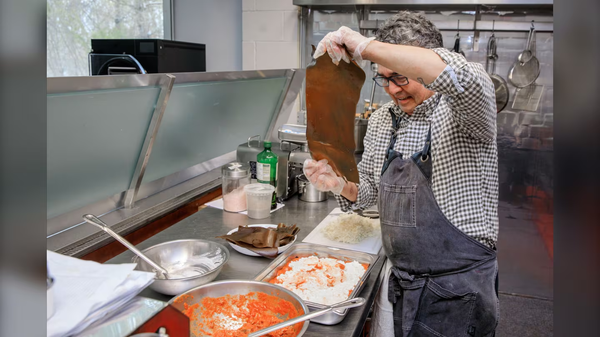
”Studies have shown a link between unbalanced lipid concentration and neurodegenerative diseases like Alzheimer’s, Parkinson’s and ALS.The integration of Indigenous knowledge is a core principle of the lab, Thomas reached out to Denise McInnis, vice-chief of the Three Rivers Mi’kmaq Band in Newfoundland, who shared her advances in creating a kelp based lasagna.Chef Tim D’Souza places a kelp noodle atop a lasagna. (Source: Christopher Kindratsky/Western Communications)“My family has always used kelp for fertilizer for our crops and I used to joke that it looked like lasagna noodles,” said McInnis. “Finally, I harvested some to see if I could make a lasagna with it and I did. It tasted and looked great and I knew kelp had a lot of great nutrients, so we’ve been making it ever since.”Of course, the team also tested the produced lasagna for flavour, which it passed with flying colours.