Raw Materials
Chemistry 10
Interview Questions
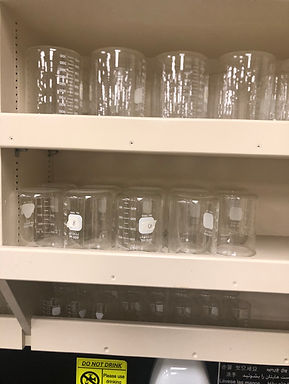
1. What is the Main focus in the Chemistry unit?
2.How will the students be safe while working?
3. How do you ensure a positive classroom environment?
4. How do you handle classroom disruptions or conflicts?
5. How do you assess student understanding and provide constructive feedback?
6. Describe your approach to building strong relationships with students, parents, and colleagues?
7. How do you handle conflicts or disagreements with students or colleagues?
8. How would you handle a situation where a student i struggling to understand a key Chemistry concept?
9. Are there any fun activities that students will be interested in?
10.What inspired you to become a Chemistry teacher?
Interview

Curriculum
Curricular Competencies
Students are expected to be able to do the following:Questioning and predicting
• Demonstrate a sustained intellectual curiosity about a scientific topic or problem of personal interest• Make observations aimed at identifying their own questions, including increasingly complex ones, about the natural world
• Formulate multiple hypotheses and predict multiple outcomesPlanning and conducting
• Collaboratively and individually plan, select, and use appropriate investigation methods, including field work and lab experiments,to collect reliable data (qualitative and quantitative)
• Assess risks and address ethical, cultural, and/or environmental issuesassociated with their proposed methods and those of others
• Select and use appropriate equipment, including digital technologies,to systematically and accurately collect and record data
• Ensure that safety and ethical guidelines are followed in their investigationsProcessing and analyzing data and information
• Experience and interpret the local environment
• Apply First Peoples perspectives and knowledge, other waysof knowing, and local knowledge as sources of information
• Seek and analyze patterns, trends, and connections in data, includingdescribing relationships between variables (dependent and independent)and identifying inconsistencies
• Planning and conducting:Sample questions to support inquiry with students:— How would you gather genetic data to study certain traits?— What tools are needed to measure the energy absorbed or released in a chemical reaction?— How would you design a roller coaster to test a variable?— What criteria could be used to select the appropriate instruments for different astronomical investigations?
• Processing and analyzing data and information:Sample questions to support inquiry with students:— How would you use genetic data to predict traits of offspring?— How can you graphically compare the pH of various substances?— What variables would affect a roller coaster’s speed?— How can you use multiple sources of data to support theories or conclusions about the universe?
• First Peoples perspectives and knowledge:Sample questions to support inquiry with students:— How has the diversity of plants in your local area benefited First Peoples?— How are First Peoples traditional medicines prepared in your local area?— How would you safely determine the efficacy of a First Peoples traditional medicine?— How are First Peoples traditional medicines prepared for different uses?— How would you design a garden for your school that features local plants and considers appropriate plant choices?
• ways of knowing: “Ways of knowing” refers to the various beliefs about the nature of knowledge that people have. They can include, but are notlimited to, First Peoples, gender-related, subject/discipline-specific, cultural, embodied, and intuitive beliefs about knowledge.
• Evaluating:Sample questions to support inquiry with students:— How can the probability of specific genetic traits in individuals be determined?— How could you reduce the sources of error when measuring energy change in a reaction?— What factors would you change to increase a roller coaster’s speed? Would it be appropriate to go faster?— How can you use multiple sources to demonstrate bias and assumptions in astronomical investigations?
• Applying and innovating:Sample questions to support inquiry with students:— How can you use what you know about genetics to make a game or activity to help other students learn about heredity?— How would you design an emergency response plan for a chemical spill in your area?


• Generate and introduce new or refined ideas when problem solving
• Contribute to finding solutions to problems at a local and/or global levelthrough inquiry
• Consider the role of scientists in innovationCommunicating
• Formulate physical or mental theoretical models to describe aphenomenon
• Communicate scientific ideas, claims, information, and perhaps asuggested course of action, for a specific purpose and audience,constructing evidence-based arguments and using appropriate scientificlanguage, conventions, and representations
• Express and reflect on a variety of experiences, perspectives, andworldviews through place
Images


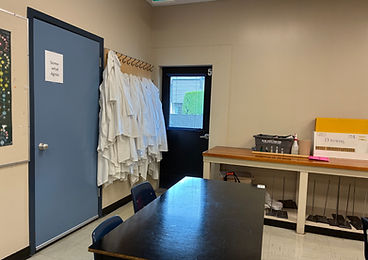

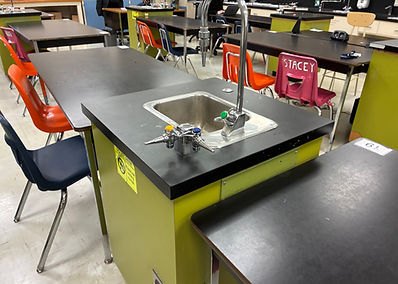
• Construct, analyze, and interpret graphs (including interpolationand extrapolation), models, and/or diagrams
• Use knowledge of scientific concepts to draw conclusions thatare consistent with evidence
• Analyze cause-and-effect relationshipsEvaluating
• Evaluate their methods and experimental conditions, including identifying sources of error or uncertainty, confounding variables, and possible alternative explanations and conclusions
• Describe specific ways to improve their investigation methods andthe quality of the data
• Evaluate the validity and limitations of a model or analogy in relationto the phenomenon modelled
• Demonstrate an awareness of assumptions, question information given,and identify bias in their own work and secondary sources
• Consider the changes in knowledge over time as tools and technologieshave developed
• Connect scientific explorations to careers in science
• Exercise a healthy, informed skepticism and use scientific knowledgeand findings to form their own investigations and to evaluate claims insecondary sources
• Consider social, ethical, and environmental implications of the findingsfrom their own and others’ investigations
• Critically analyze the validity of information in secondary sources andevaluate the approaches used to solve problemsApplying and innovating
• Contribute to care for self, others, community, and world throughindividual or collaborative approaches
• Transfer and apply learning to new situations